
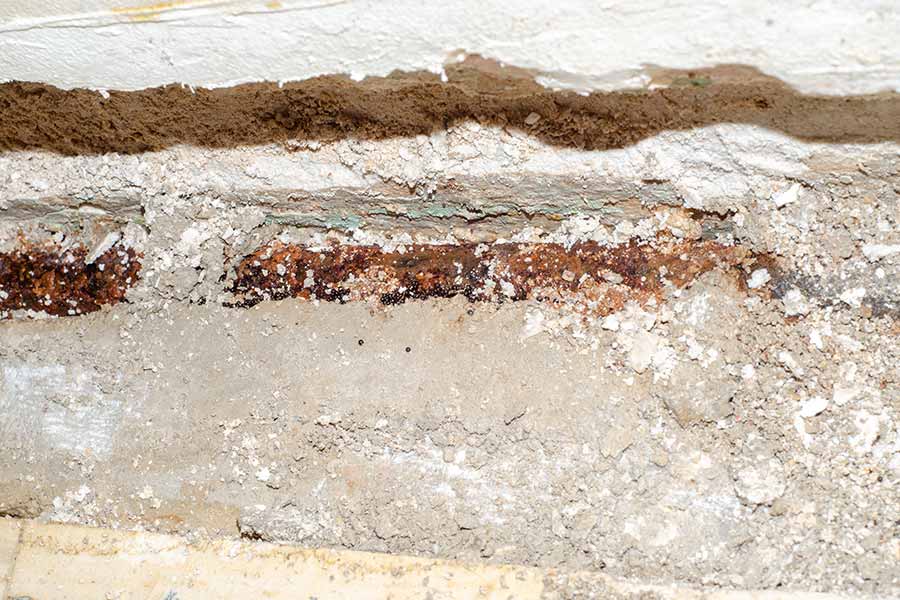
A slab leak is a break in a water line running beneath your home’s concrete foundation. The most reliable early signs are a water bill that climbs with no change in household use, a warm patch on the floor, the sound of running water when every fixture is off, and new cracks in walls or flooring. Any one of these is worth investigating. Two or more together usually means water has been escaping under the slab for weeks.
Duncanville sits on Blackland Prairie clay, and that soil is the reason slab leaks behave differently here than they do in other parts of the country. Clay swells when it takes on water and shrinks hard during a dry August. That movement puts steady stress on the copper and galvanized lines cast into slabs across the older neighborhoods off Cedar Ridge and Danieldale, and it also hides the evidence, because soil that is already shifting masks the settling that a leak causes. It is the single biggest reason plumbers serving Duncanville see the same failure pattern here year after year.
What Is a Slab Leak and Why Does It Matter?
A slab leak is a pressurized water line failing underneath the concrete foundation on which your house sits. Because the pipe is under constant pressure, it does not drip and stop. It runs until someone shuts the water off.
The damage arrives in three stages. First, water saturates the soil supporting one section of the foundation. Second, that saturated soil loses its bearing strength and the slab settles unevenly above it. Third, the differential movement shows up as cracked drywall, doors that stick, and separation between the wall and the floor. By the time stage three is visible from the living room, the repair has grown from a plumbing job into a plumbing job plus interior repair.
There is a second cost that homeowners underestimate. Moisture trapped under the flooring feeds mold growth, and the affected area is sealed away where nobody sees it until the carpet is pulled up. Locating the break early with proper water leak detection equipment is what keeps a slab leak from turning into a foundation claim.
What Are the Signs of Water Accumulation in Your Home?
Water escaping under a slab has to go somewhere, and it usually surfaces at the edges of the house or through the flooring. Watch for damp or discolored patches on walls near the base of a room, which signal water wicking up through the slab into the drywall.
A musty smell that will not clear is the second reliable indicator. Mold needs moisture and darkness, and the space under a floating floor or behind a baseboard provides both. If a room smells different than the rest of the house on a closed-up afternoon, that is worth a look.
Flooring tells the story too. Tile that has begun to lift at the grout lines, laminate that has cupped at the seams, or a section of carpet that stays cool and slightly damp all point to water moving beneath the surface. Outside, look for a strip of grass along the foundation that stays green through a Texas dry spell while the rest of the lawn browns.
If you find yourself running a dehumidifier in a room that never needed one before, treat that as data rather than an inconvenience. Rising indoor humidity in a single zone of the house is often the first measurable change a slab leak produces.
Why Has Your Water Bill Gone Up With No Change in Use?
A water bill that rises with no change in household habits is the single most common way slab leaks are discovered. A pressurized line under a slab can release water continuously, and the meter records every gallon.
The EPA estimates that household leaks waste around a trillion gallons nationwide each year, and that roughly one in ten homes has a leak, losing 90 gallons a day or more. A slab leak sits at the serious end of that range because nothing interrupts it.
The check takes ten minutes. Turn off every fixture and appliance that uses water, including the ice maker, then read the meter and read it again two hours later. If the number moved, water is leaving the system somewhere. That test does not tell you where, but it tells you conclusively that something is wrong, and it converts a suspicion into a fact worth acting on. Scheduling routine plumbing maintenance catches many of these before the bill does.
What Should You Look For in Wall and Floor Cracks?
Not all foundation cracks mean a slab leak, and knowing the difference saves homeowners a lot of worry. Hairline cracks that appear in the first year or two after construction are usually normal curing shrinkage.
The cracks worth acting on have three characteristics. They widen over time rather than staying static. They appear suddenly rather than gradually. And they cluster around openings, which is why cracks running diagonally from the upper corners of door and window frames deserve more attention than a straight vertical line in the middle of a wall.
Also watch for a gap opening between the wall and the floor, or between the baseboard and the wall. That separation means one part of the slab has moved relative to another. On tile floors, look for cracks that run across multiple tiles in a line rather than a single cracked tile, which usually just means something heavy was dropped.
In Duncanville, TX, seasonal soil movement produces some of this on its own. The distinguishing question is timing. Cracks that appear during a wet spring or a drought are often soil-related. Cracks that appear alongside a warm floor spot, a rising bill, or the sound of running water point to plumbing, and that combination is what should prompt a call for professional drain and pipe repair.
What Do Strange Noises From Your Pipes Mean?
Sound is one of the most useful diagnostic tools available to a homeowner, and it costs nothing. The key is knowing when to listen. Late at night, with the HVAC off and every fixture closed, the house is quiet enough to hear water that should not be moving.
A steady hiss or the sound of running water under the floor when nothing is turned on is the classic slab leak signature. It means pressurized water is escaping through a break.
Other sounds mean other things. Banging when a faucet shuts off is water hammer, which is a pressure issue rather than a leak, though chronically high pressure does accelerate the pipe failures that become slab leaks. Whistling at a single fixture usually means a restriction at that fixture. Gurgling from a drain points at the drain system, not the supply lines.
Learning to separate these matters because it changes who you call and how fast. A hiss under the slab at midnight is not something to watch for a few weeks.
What Does a Mold or Mildew Smell Indicate?
A persistent musty odor with no visible source often means water has been under your floor long enough for mold to establish. Mold needs about 24 to 48 hours of sustained moisture to begin growing, so the smell tells you the problem is not new.
Check the rooms where flooring meets an exterior wall, and check closets and pantries, which have poor air circulation and concentrate odors. In homes with a slab foundation, there is no crawlspace to inspect, so smell often arrives before sight.
The reason to act on odor rather than wait for a visible stain is that the remediation cost curve is steep. Drying a small area and repairing one pipe is a contained job. Removing affected flooring, subfloor material, and drywall across several rooms is not. The smell is the cheapest warning you will get.
Is Fluctuating Water Pressure a Red Flag?
Falling water pressure can indicate a slab leak, but it is the least specific sign on this list, and it is worth understanding why before you panic about it.
A slab leak reduces pressure only when the break is large enough to divert a meaningful volume. More often, pressure changes come from a failing pressure regulator, a partially closed main valve, mineral buildup at fixture aerators, or municipal work in the area.
What makes pressure loss meaningful is the company. Pressure that drops on its own is worth a straightforward diagnostic. Pressure that drops alongside a higher bill and a warm floor is a different conversation. Treat pressure as a supporting sign rather than a standalone one, and note whether the change affects the whole house or just one fixture. Whole-house means supply side. One fixture means that fixture.
What Do Warm Spots on Your Floor Indicate?
An unexplained warm area on the floor is the most specific slab leak sign there is, and it is the one homeowners most often dismiss. It happens when the leak is on the hot water line. Heated water saturates the soil and the concrete above it, and the slab conducts that warmth to the surface.
Walk the house barefoot in the morning before the sun has hit the floors. You are feeling for a patch noticeably warmer than the floor around it, usually a few feet across, often in a hallway or along the run between the water heater and a bathroom.
Unlike a rising bill or a wall crack, a warm floor spot has almost no innocent explanation in a home without radiant floor heating. If you find one, the diagnostic question is no longer whether there is a leak but where exactly it is and how to reach it with the least demolition.
How Does Landscaping Affect Slab Leaks?
Landscaping influences slab leaks mostly through how it manages water around the foundation, and in North Texas, that influence is larger than most homeowners expect.
The goal is consistency. Clay soil damages foundations and the pipes inside them when it swings between saturated and bone dry. Soil that stays evenly moist moves far less. That is why foundation watering during a Texas summer is standard advice here and unheard of in other regions.
Grading matters as much as watering. Soil should slope away from the house so roof runoff does not pool along the foundation and create a saturated zone on one side while the other side dries out. Downspouts should discharge several feet from the slab rather than at its edge.
Tree selection is the third factor. Large water-seeking species planted close to the house send roots toward the foundation, and while roots rarely puncture a pressurized supply line, they draw enormous volumes of moisture out of the soil directly beside the slab, which creates exactly the uneven drying that stresses the pipes cast inside it.
When Should You Call a Professional Plumber?
Call a professional when you have one high-confidence sign or two supporting ones. The signs below are the ones that should not wait.
Persistent Water Puddles
Standing water that does not clear after two or three dry days is not rain. Note where it sits. Water pooling against the foundation, in a consistent spot, or in a strip rather than a low-lying dip in the yard suggests a supply line rather than drainage.
Unusual plant growth around the wet area strengthens the case. Grass that is thicker and greener in one band, or a sudden patch of moss where none grew before, indicates a steady water source underground rather than a weather event.
Increased Water Bills
Treat a bill increase as a signal, not a billing error, once you have ruled out an obvious cause such as filling a pool or houseguests. Compare against the same month last year rather than last month, since seasonal irrigation makes month-to-month comparisons misleading.
Run the meter test described earlier before you call. Arriving at the conversation with a confirmed meter movement gives the technician a real starting point and shortens the diagnostic.
Visible Foundation Cracks
Three patterns justify a call. Cracks that are actively widening, which you can confirm by marking the ends with a pencil and checking in two weeks. Any dampness or mineral residue at or near a crack. And doors or windows that have begun to stick or fail to latch, which indicates the frame has moved out of square.
That last one is often the sign homeowners notice first and attribute to humidity. In a home with other slab leak indicators, a door that suddenly will not close is structural movement, and it means the situation has progressed past the plumbing.
Frequently Asked Questions
How much does it cost to fix a slab leak in Duncanville, TX?
Cost depends on three things: where the break is, how it is accessed, and whether the surrounding line is worth saving. A single break reached through a small section of flooring is a contained repair. A leak under a load-bearing area, or an aging line with multiple failure points, may be better solved by rerouting the line overhead rather than repeatedly opening the slab. Benjamin Franklin Plumbing & Drain Services of Duncanville quotes the full price before any work starts, so you see the number and the options before committing.
Can I fix a slab leak myself?
No. Locating a slab leak requires acoustic and pressure equipment, and reaching one means cutting into structural concrete. An incorrect location means opening the slab in the wrong place, which adds repair cost without solving anything. This is one of the few plumbing problems where a homeowner’s best move is to shut off the main and call someone.
Does homeowners’ insurance cover slab leaks?
Policies commonly cover the resulting water damage while excluding the pipe repair itself, but terms vary significantly between carriers. Two things help before you file: document the damage with photos and dates, and get a written diagnosis identifying the cause. Check your specific policy language, since coverage for foundation and slab work is one of the most variable areas in Texas homeowners’ policies.
How long can a slab leak go unnoticed?
Months, routinely. A slab leak produces no visible drip and no obvious sound during a normal, noisy day, and its early symptoms look like ordinary house behavior. Most are discovered through a water bill, which means the leak has typically been running through a full billing cycle before anyone investigates.
Are slab leaks more common in older Duncanville homes?
They are more common in homes built with copper or galvanized supply lines run through the slab, which describes much of the housing stock built here through the 1960s and 1970s. Age matters less than material and soil conditions. A 1970s house on stable soil may never have a problem, while the same house on an actively shifting section of clay may see repeated failures.
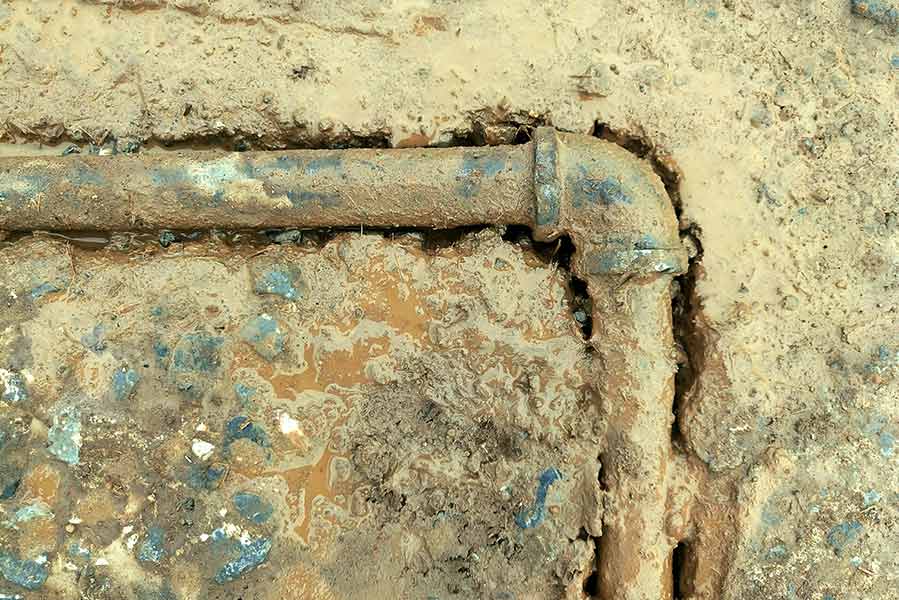
Protecting Your Duncanville Home From Slab Leaks
Slab leaks are expensive because they are quiet, not because they are complicated. The warning signs on this list are all things a homeowner can check without tools: a bill, a barefoot walk across the floor, a listen at midnight, a look at where the grass stays green. Checking them once a season costs nothing and catches most slab leaks while the repair is still a plumbing job.
If you have found one of the high-confidence signs, particularly a warm floor spot or a meter that moves with everything shut off, the next step is a proper diagnosis rather than a wait-and-see period. You can contact our team today to get the leak located and see your options before deciding anything.
