
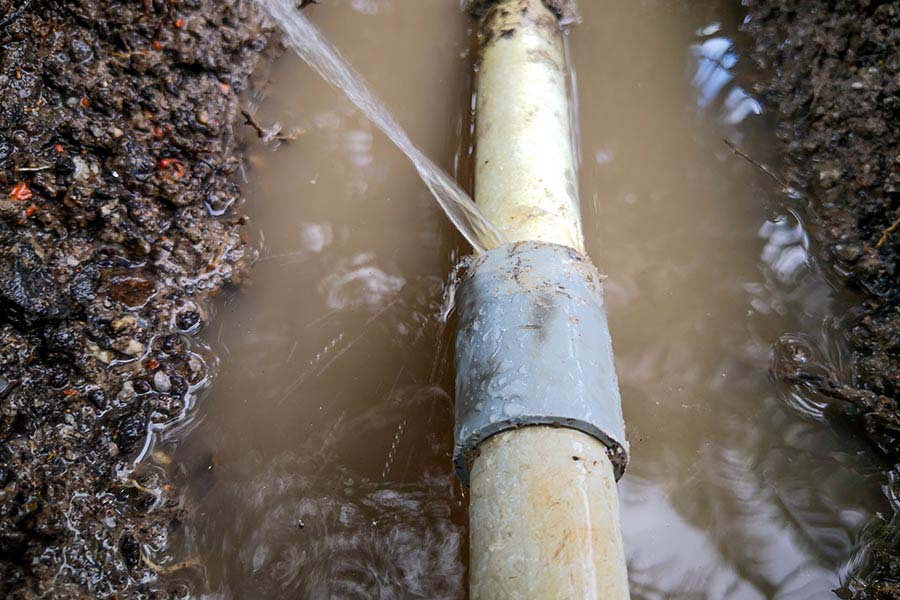
Descaling is the mechanical removal of mineral scale and corrosion buildup from the inside of your water supply pipes, restoring the interior diameter that years of deposit have narrowed. The signs a DeSoto home needs it are weak flow that has declined gradually rather than suddenly, low pressure at every fixture instead of one, discolored water on first draw, and visible mineral crust at aerators and showerheads.
The important distinction up front: descaling addresses your pressurized supply lines, the pipes bringing clean water into the house. It is a different job from drain cleaning, which handles the waste lines carrying water out. The two use different equipment, and a tool designed for one cannot inspect or service the other.
DeSoto’s relevance here is its housing stock. Much of the city was built out from the 1960s through the 1980s along the Hampton Road and Pleasant Run corridors, and homes from that era frequently have galvanized steel supply lines. Galvanized pipe scales from the inside as its zinc coating wears away, and North Texas municipal water is moderately hard, which accelerates the deposition. That combination is why gradual pressure loss is one of the most common calls plumbers serving DeSoto take on older homes.
What Are the Signs Your Water Pressure Is Weak?
The most diagnostic feature of scale-related pressure loss is that it arrives slowly. Homeowners often cannot name when it started, because a pipe narrowing over fifteen years never produces a noticeable day-to-day change. If you only realized the pressure was low after staying somewhere else, that pattern points at buildup rather than a failure.
Whole-house versus single-fixture is the next thing to establish, and it costs nothing to check. Run the kitchen sink, then a bathroom sink, then a shower. Weak flow everywhere indicates a supply-side problem: the main line, the pressure regulator, or scaled piping. Weak flow at one fixture means that fixture, and the fix is usually a clogged aerator or cartridge, not a whole-house issue.
Watch for pressure that drops sharply when a second fixture opens. A pipe with an adequate diameter handles two simultaneous demands. A pipe scaled down to a fraction of its original bore cannot, so flushing a toilet while the shower runs produces a noticeable drop.
Discolored water on the first draw of the morning is a specific galvanized indicator. Rusty or yellowish water that clears after a few seconds means corrosion products have settled in the line overnight. Clear water that later stains fixtures suggests mineral content rather than pipe corrosion, which is a different problem with a different solution.
Also note strange noises and visible leaks. Both suggest the pipe walls have thinned, which changes the recommendation substantially, as covered below.
How Does Mineral Buildup Affect Plumbing?
Scale forms when dissolved minerals in the water precipitate onto pipe walls and accumulate in layers. In galvanized steel, these compounds cause corrosion: as the protective zinc layer wears through, the steel beneath oxidizes, and the rough corroded surface gives mineral deposits something to grip.
The flow consequence is more severe than the visual suggests, and this is the part worth understanding. Flow through a pipe does not fall in proportion to diameter. It falls much faster. A pipe whose interior has narrowed by half does not carry half the water. It carries a small fraction of it. That non-linear relationship is why pressure can seem tolerable for years and then become intolerable in a relatively short window.
Buildup also affects everything downstream. Water heaters collect sediment at the tank bottom, which insulates the burner from the water and reduces efficiency. Fixture cartridges and aerators clog with dislodged material. Appliance inlet screens on dishwashers and washing machines restrict.
Then there is the failure risk. Scale and corrosion do not simply narrow a pipe. They consume the wall thickness from the inside. A heavily scaled galvanized line can be substantially thinner than its original spec while still holding pressure, and that matters enormously for what should be done about it.
What Are the Benefits of Descaling Your Plumbing Pipes?
Descaling restores the interior diameter, which restores flow. Because of that non-linear relationship, clearing even a portion of the buildup can produce a disproportionate improvement in usable pressure.
The knock-on benefits follow from that. Fixtures work as designed. Water heaters run more efficiently without sediment insulating the heating element. Appliances stop clogging their inlet screens. Water quality improves at the tap when the corrosion products responsible for discoloration are removed rather than continuously shed into the supply.
Descaling also buys time on a system that is not yet ready for replacement. On a house where the pipe walls are still sound, it is a maintenance procedure that extends useful service life at a fraction of the repiping cost.
Here is the part that most articles on this topic leave out, and it is the most important thing a DeSoto homeowner can know before spending money. Descaling only makes sense if there is enough pipe wall left to descale. Removing buildup from a galvanized line that has corroded to near failure can expose weak points and produce leaks shortly afterward. That is not a botched job. It is the buildup that has functioned as the only thing holding a compromised pipe together.
Which means the honest answer for some homes is that descaling is the wrong purchase, and whole-home repiping service is the one that solves the problem instead of postponing it. Any plumber recommending descaling without first establishing pipe wall condition is guessing on your behalf.
How Is a Descaling Job Actually Diagnosed and Performed?
Diagnosis starts with pressure measurement, not with a camera. A gauge on an exterior hose bib reads static pressure with everything closed, then flowing pressure with fixtures open. The gap between those two numbers is what identifies a restriction, because a scaled line holds acceptable static pressure and collapses under flow.
That test also rules out the cheaper causes first. A failed pressure regulator, a partially closed main shutoff, or municipal supply pressure at the low end of normal all produce symptoms resembling scaled pipe and cost far less to correct. Checking them first is basic sequencing.
To confirm scale, a technician cuts and removes a short section of supply pipe, usually somewhere inconspicuous, and looks at the cross-section. That single sample answers both questions at once: how much the bore has narrowed, and how much wall thickness remains. No non-invasive method gives you the second number, which is the one that determines whether descaling or repiping is appropriate.
To be clear about equipment, since this is a common point of confusion: a sewer camera cannot inspect supply lines. Sewer cameras are built for gravity drain and sewer pipes, which are large-diameter and non-pressurized. Household supply lines are far too narrow and are under pressure. Anyone proposing to camera your supply piping to assess scale is describing something that does not work.
The descaling itself is mechanical. Specialized rotating tools are run through opened sections of line to abrade the deposit from the walls, and the system is then thoroughly flushed to carry loosened material out rather than into fixture cartridges. Fixtures are commonly protected or their aerators removed during the flush.
Preventing recurrence is the follow-up conversation. Where hard water is driving the deposit, professional water conditioning addresses the cause instead of repeating the cleanup every few years.
When Should You Call a Professional Plumber?
Call when pressure has fallen across the whole house, when it has fallen gradually over years, or when first-draw water is discolored. Those three together strongly indicate supply-line buildup and are worth a proper diagnostic.
Call sooner if you see rusty or brown water regularly, which indicates active corrosion rather than settled mineral. Call sooner if you have found any leak, however small, on a galvanized line, because a pinhole leak in galvanized pipe means the wall has been consumed and more pinholes typically follow in the same run.
Frequent fixture clogs are also worth reporting. Aerators and cartridges that need cleaning every few months are catching material shed from inside your pipes, and that is upstream information rather than a fixture problem.
Benjamin Franklin Plumbing of Duncanville prices the work before starting so you can weigh descaling against repiping with real numbers rather than a range, and emergency service is available when a line lets go outside business hours.
How Can You Maintain Good Water Pressure?
Watch the trend rather than the moment. Note flow at a familiar fixture every few months so a gradual decline registers as a change rather than becoming the new normal.
Clean aerators and showerhead screens periodically. Unscrew, rinse, soak in white vinegar if crusted, reinstall. This takes minutes and resolves a meaningful share of what gets reported as low pressure.
Flush the water heater annually to clear sediment from the tank bottom. Scale and sediment reach the heater the same way they reach fixtures, and a heater full of deposits loses both efficiency and capacity.
Have static water pressure checked during service visits. Pressure above the normal residential range stresses pipes, fittings, and appliance valves, and chronically high pressure accelerates the failures that eventually force a repipe. A pressure-reducing valve is an inexpensive correction for an expensive problem.
Where hard water is the underlying driver, treating the water is what breaks the cycle. Routine plumbing maintenance catches pressure decline, water heater sediment, and early corrosion while each is still a small item.
Frequently Asked Questions
How much does pipe descaling cost in DeSoto, TX?
Cost depends on the length of pipe being treated, access to it, and how much of the system is affected. Benjamin Franklin Plumbing of Duncanville quotes the full price before work begins. The more useful comparison is descaling against repiping, and that comparison requires knowing your pipe wall condition first, which is what the diagnostic establishes.
Can I descale my pipes myself with a chemical product?
Consumer descaling chemicals are formulated for fixtures and appliances, not for structural supply piping, and running an aggressive product through already-corroded galvanized line risks creating leaks. Supply-line descaling uses mechanical tools through opened sections and a controlled flush. It is not a DIY procedure.
How do I know if I need descaling or a whole repipe?
Wall thickness decides it. If the pipe has adequate wall remaining, descaling restores flow and extends service life. If corrosion has consumed the wall, descaling can expose weak points and produce leaks, and repiping is the sound choice. A cut sample of pipe answers this, and no non-invasive test substitutes for it.
Does a water softener prevent scale from coming back?
Treating hard water addresses the mineral deposition side of the problem, which slows recurrence considerably. It does not reverse existing corrosion in galvanized pipe, since that damage is already done. Softening is prevention going forward rather than a repair of what has already happened.
Why is my water pressure fine in the morning but weak in the evening?
Time-of-day variation usually points to municipal supply demand rather than your pipes, since neighborhood-wide use peaks in the evening. Scale-related loss is consistent regardless of hour. If the pattern is strictly time-based, note it, because it changes the diagnosis and may mean the problem is not in your house at all.
Getting Real Pressure Back in Your DeSoto Home
Weak pressure across a whole DeSoto house, developing slowly, with discolored first-draw water, points at supply lines that have narrowed from the inside. Descaling can restore that flow, but only on a pipe with enough wall left to survive the process, and that is a question a pressure test and a cut sample answer rather than a guess.
Start with the diagnostic, not the procedure. If your pressure has been sliding for years, request a free estimate and get the pressure measured and the pipe condition established, so the money goes toward whichever fix your system actually needs.
