
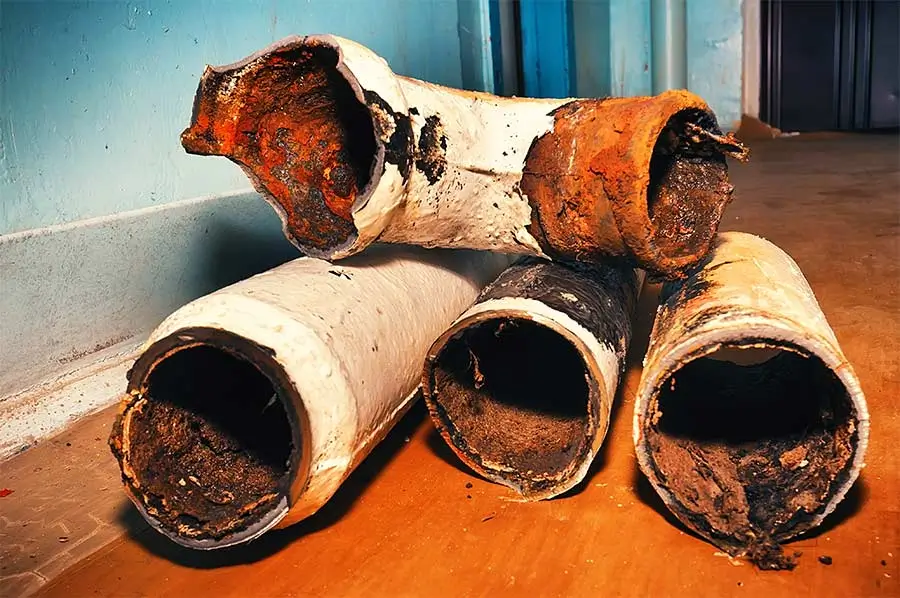
Pipe bursting replaces a failing underground pipe without trenching the length of your yard. A bursting head is pulled through the existing line, fracturing the old pipe outward into the surrounding soil while simultaneously drawing a new seamless pipe into the space it occupied. The work happens through two limited-access pits instead of an open trench, and most residential runs are completed in a single day.
Glenn Heights presents a specific version of this problem. The city straddles the Dallas and Ellis county line along the I-35E corridor, and its housing stock splits between properties old enough to still have original clay or cast iron sewer laterals and newer subdivisions with mature landscaping and finished hardscape already in place. In our work throughout Glenn Heights, the deciding factor is rarely whether the old pipe needs replacing. It is what sits on top of it. When the line runs under a driveway, a patio, or an established tree, the cost of putting the yard back can exceed the cost of the pipe work itself, and that is where trenchless methods change the math. Homeowners comparing options can see the full scope of what plumbers serving Glenn Heights handle on these lines.
What Is Pipe Bursting and How Does It Work?
Pipe bursting is a trenchless replacement method that destroys the old pipe in place and installs a new one along the same path in a single pull. It is not a repair or a liner. The result is a completely new pipe.
The sequence runs like this. Two access pits are excavated, one at each end of the run to be replaced, typically a few feet across. A cable is threaded through the existing pipe from one pit to the other. A conical bursting head is attached to that cable, with the new pipe connected behind it. A hydraulic winch then pulls the head back through the old line under high force. The cone splits the old pipe outward into the soil, and the new pipe follows immediately into the void.
The new pipe is almost always high-density polyethylene, fused into one continuous length before it goes in. That matters more than it sounds. Because HDPE is fused rather than joined at intervals, the finished line has no joints along its run, and joints are where root intrusion and infiltration begin. A fused line also flexes with soil movement instead of cracking at a rigid coupling, which is a meaningful advantage in Blackland Prairie clay that swells and shrinks with every wet season and dry August.
The practical result is a new pipe with better flow characteristics than the clay or cast iron it replaced, installed without opening the ground between the two pits. That combination is why the method has largely displaced open-cut replacement for straightforward residential runs, and why trenchless sewer repair and replacement has become the default recommendation rather than the exception.
What Are the Benefits of Pipe Bursting for Your Glenn Heights Home?
The primary benefit is that your property stays largely intact. Two access pits instead of a trench means the driveway, the patio, the irrigation system, the mature oak, and the sod all stay where they are.
The restoration savings are the real financial story, and they are frequently invisible in a quote comparison. An open-cut replacement quote covers the pipe and the excavation. It does not always cover replacing forty feet of driveway concrete, rebuilding a flower bed, repairing a sprinkler zone, or re-sodding a lawn. Those costs land on the homeowner afterward, and on a property with finished landscaping, they can rival the plumbing invoice.
Time is the second benefit. Most residential runs are completed within a day, which means one day without normal water use rather than a week of living around an open trench.
Durability is the third. HDPE carries manufacturer service life ratings measured in decades, and its resistance to corrosion and root intrusion addresses the two failure modes that killed the original line. Replacing a 1970s clay lateral with fused HDPE is not a like-for-like swap. It is an upgrade in material terms, which is why fewer callbacks follow it.
Benjamin Franklin Plumbing & Drain Services of Duncanville quotes the full price before the work begins, so the number you approve is the number you pay, including the restoration scope.
When Should You Consider Pipe Bursting for Your Plumbing Issues?
Pipe bursting is the right call when the pipe itself has reached the end of its service life rather than having one isolated defect. Several patterns point there.
Repeat backups in the same line after cleaning are the clearest sign. A line that clears and then fails again within months is telling you the blockage is a symptom. Root intrusion at multiple joints, longitudinal cracking, or interior scaling all produce that cycle, and each cleaning buys less time than the one before.
Material and age matter next. Clay laterals commonly reach 50 to 60 years of service, and cast iron somewhat longer, depending on soil chemistry. A house whose original sewer lateral is still in the ground after five decades is running on borrowed time regardless of how it behaves today.
Camera evidence is what converts suspicion into a decision. A sewer camera run shows whether you are looking at one bad section or a line that has failed along its length, and that distinction determines whether a spot repair or a full replacement is the economical choice.
There is also a case for bursting when the problem is undersizing rather than failure. Some older laterals were installed at diameters that no longer suit the fixture count of a remodeled or expanded house, and bursting allows an upsize on the same path.
How Does Pipe Bursting Compare to Traditional Pipe Repair Methods?
The honest comparison includes the cases where pipe bursting is not the answer, because it is not universally applicable and any contractor who says otherwise is overselling it.
Against open-cut excavation, bursting wins on disruption, restoration cost, and timeline for most residential runs. Open-cut still wins in specific situations: when the line has collapsed completely, there is no path left to thread a cable through. When there are severe offsets or the pipe has separated at a joint and shifted laterally, the bursting head can follow the breakout of the pipe path instead of staying in it. When the line runs close alongside a gas line, a water main, or another buried utility, the outward force of the burst can damage what sits next to it, so locates through Texas 811 and a judgment call about clearance come before any commitment.
Against pipe lining, which cures a resin sleeve inside the existing pipe, bursting is the better choice when the host pipe is too deteriorated to support a liner or when the line needs to be upsized. Lining is the better choice when the host pipe is structurally sound and access is even more constrained.
The right method depends on what the camera shows. In our work across Glenn Heights, the recommendation follows the inspection rather than the other way around, and on homes where the whole supply system is aging alongside the sewer lateral, a full home repiping sometimes turns out to be the better-value scope.
What to Expect During the Pipe Bursting Process
The process begins with a camera inspection to confirm that bursting is appropriate and to identify the exact run being replaced. This is the step that determines everything after it, and skipping it is how homeowners end up paying for the wrong method.
Utility locates come next. Texas 811 marks buried gas, electric, and communication lines before excavation begins, and the technician confirms clearance between the sewer path and anything running near it.
The two access pits are then excavated and positioned to minimize disruption where possible. The new HDPE pipe is fused above ground into a single continuous length, which takes time and space and is why a section of yard or driveway serves as a staging area during the work.
The pull itself is the shortest part of the day. The bursting head is drawn through under hydraulic force, the new pipe follows, and the connections at each end are made.
Before the crew leaves, the new line is tested and typically re-camera’d so you can see the finished pipe rather than take it on faith. Ask for that footage. A completed replacement should be verifiable, and a plumber confident in the work will show it to you. The access pits are then backfilled and the immediate area restored. On homes where secondary drain issues surfaced during the inspection, drain repair work is usually handled in the same visit rather than as a separate trip.
Frequently Asked Questions
How long does pipe bursting take on a typical Glenn Heights home?
Most residential sewer lateral replacements are completed in one working day, including the access pits, the pull, and the connections. Longer runs, deeper lines, or properties where the pits have to be positioned around hardscape can extend into a second day. The camera inspection that precedes the work is usually a separate, shorter visit.
Will pipe bursting damage my driveway or landscaping?
The two access pits require excavation, so those specific spots are disturbed. Everything between them stays intact, which is the point of the method. If a pit has to be located in a driveway or patio, that is identified and priced before work starts rather than discovered afterward.
Can pipe bursting be used on a completely collapsed pipe?
No. Bursting requires a continuous path through the old pipe for the cable and head to follow. A fully collapsed section leaves no path, and that run has to be opened conventionally. This is one of the main reasons the camera inspection comes first.
What kind of pipe replaces the old line?
High-density polyethylene, fused into one continuous length with no joints along the run. HDPE resists corrosion and root intrusion, and it flexes with the seasonal soil movement that Glenn Heights properties see every year, rather than cracking at rigid connections the way clay does.
How do I know whether I need bursting or just a cleaning?
Frequency answers it. A line that backs up once and then runs clean for years had a blockage. A line that backs up again within months of a cleaning has a structural problem, and no amount of cleaning fixes the structure. A camera run settles the question in a single visit.
Choosing the Right Fix for Your Glenn Heights Sewer Line
Pipe bursting solves a specific problem well: a failing underground line on a property where digging a trench would cost more to repair than the pipe costs to replace. It is not the answer for every line, and the cases where it does not apply, collapsed sections, severe offsets, and tight utility clearances, are worth knowing before you start comparing quotes.
The decision should follow a camera inspection rather than precede it. If your line has backed up more than once or your home still has its original clay or cast iron lateral, get in touch with our team and start with a look inside the pipe, so whichever method you choose is the one the evidence actually supports.
